
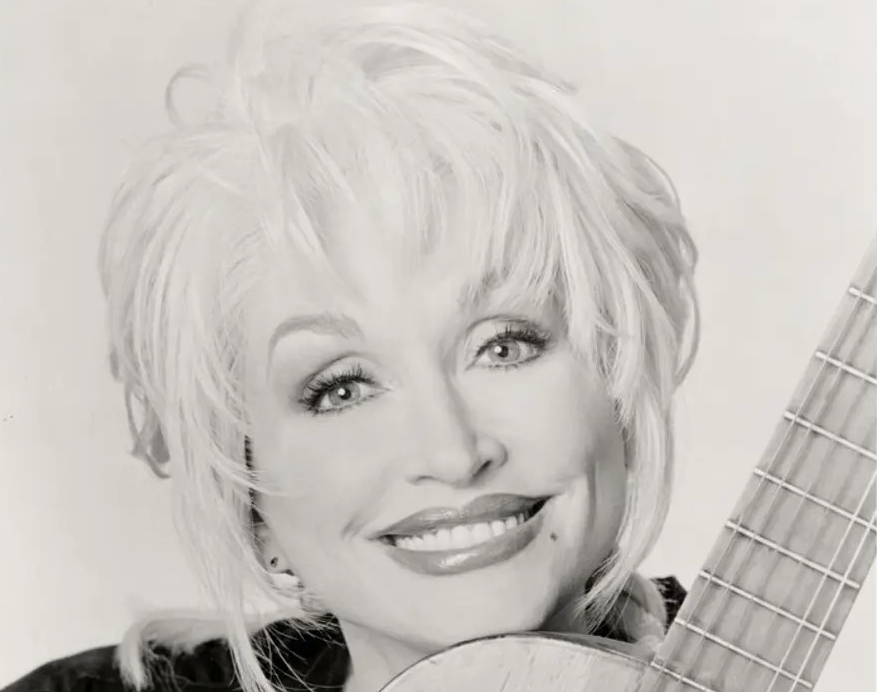
Music news: Country music legend Dolly Parton has died at 80
Dolly Parton was many things. She was a multi-hyphenate entertainer who made men grovel in her presence while making women feel like she shone a light on them. She never apologized for her personality, her looks, her jokes or her commitment to being good in an unforgiving world. Dolly’s symbol was always the butterfly, the transformational creature that flitted through our lives with grace.
Country music legend Parton died Tuesday in Nashville at 80, closing a career that stretched seven decades and made a poor girl from the Smoky Mountains one of the most recognizable people on Earth. Her publicist said she died peacefully at the Vanderbilt-Ingram Cancer Center, surrounded by loved ones, after what the family called a brief battle with cancer. She had been admitted Friday. A small private service will be held for the immediate family. Her husband of nearly 60 years, Carl Dean, died in March 2025.
Born in Locust Ridge, Tennessee, in 1946, one of 12 children, Parton headed for Nashville after high school and eventually turned her signature brand of Appalachian storytelling into a global language. There was “Coat of Many Colors,” “Jolene,” “9 to 5” and “I Will Always Love You,” plus movies, Dollywood, 11 Grammys and more than 100 million records sold.
Dolly’s peculiar genius was turning injury into something another person could carry. Poverty became “Coat of Many Colors.” Leaving became “I Will Always Love You.” Workplace exploitation became “9 to 5.” She never denied the shitty thing. She found a melody inside it.
As the tributes pour in, I keep thinking about “Jolene.” The song isn’t about being the most gorgeous woman in town; it’s about the terror that somebody else might snatch away what you love. As a writer, Dolly could step outside her own glamour and humanize something painfully ordinary: jealousy, infidelity, the fear of not being enough.
She made it tangible even while looking to the rest of us, like Dolly fucking Parton.

Dolly wasn’t merely unapologetic about looking like Dolly. She invented Dolly Parton—hair, breasts, rhinestones, heels, jokes—and then spent sixty years being smarter than people who mistook the costume for the woman.
That’s fundamental to why women and queer people loved her. She took everything supposedly disqualifying about femininity—artifice, sexuality, camp, excess—and refused to treat any of it as incompatible with intelligence, business acumen, Christianity, seriousness or power.
But the rhinestones were never Dolly’s whole story.
Parton built the Imagination Library into an international childhood-literacy program and helped fund research that contributed to Moderna’s COVID-19 vaccine. She became fantastically wealthy and famous and then used that influence to aid literacy, disaster relief, medical research and people who were frequently treated like political punching bags. She could scratch out heartbreak with a knife, tell a filthy joke with a Sunday-school smile and somehow remain universally beloved.
She openly supported LGBTQ people, same-sex marriage and transgender folks while maintaining her Christian identity; she liked to tell about the time she entered a Dolly Parton lookalike contest filled with drag performers—and lost.
She wanted kids to read, drag queens to be fabulous, women to get their fair share and the rest of us to just enjoy a song. Her death feels heavy because she was visibly good, someone who could make you laugh, think and feel thankful she was here, that she was ours to treasure.
The news came via a video her nephew Bryan Seaver recorded on her behalf—something Parton had asked him to do years earlier, long before he could wrap his head around his aunt’s request, that unfathomably Dolly Parton could die. Seaver, who ran her security detail as his father did before him, said he had imagined the weight of the moment for years without feeling it until now. Dolly was a planner.
And through it all, even as a sex symbol, Dolly stayed true to Carl. Nearly sixty years with a man who largely refused to participate in the celebrity circus. She was my first crush. In 2021, at 75, she recreated her 1978 Playboy cover—the first ever by a country singer—as a birthday present for Carl, shooting it herself and framing the mock-up next to the original. He still thought she was a hot chick after 57 years, she said, and she wasn’t going to talk him out of it. Babes never retire.
Tonight, her songs will pour out of honky-tonks all over Austin, Nashville and beyond.
The butterfly is gone. Her ethereal grace is not. Neither are her songs.
Featured photo by Dennis Carney via public domain


You must be logged in to post a comment.